"He who knows others is wise. He who knows himself is enlightened." — Lao Tzu

Writing a Poem for Class Isn't So Bad,
Especially When You Like the Topic.
After So Many Reality Checks, a Teacher Learns
To Put Her Students First and Build on Their Interests.
By Freddie A. Bowles
Posted on Thursday, September 17, 2015
When I was a novice teacher, I considered content to be the most important element of the classroom. I love languages and other cultures — and I thought all my students did, too. Reality check numero uno: Not every student loves the world beyond Arkansas like I do.
As I became more experienced, I learned that content was just a small part of teaching. For one, there was too much administrative paperwork involved. For two, it took a lot of effort to command the center of attention in the classroom — and even when I did succeed in that vain endeavor, it didn’t guarantee that every student would love language and culture as much as I do. Reality check numero dos: — Students were more interested in each other than in their teacher and the language I was teaching.
Now that I have a few years of teaching behind me, I follow the cues and clues provided by persistent classroom reality checks: Put my students first and build on their interests in each other. I like to focus on building a community of learners so that students are comfortable in my classes — curious, engaged, and unafraid of making mistakes or asking questions.
Rooted in Rapport and Respect
One of my favorite techniques to build rapport and respect is rooted in my love of poetry. I have a number of poetry assignments “up my sleeve,” but the one I enjoy most at the beginning of the semester is the fixed-form poem. Students simply follow the instructions and insert their own word choices, and, badabing, they have written a poem. Some students cringe when they learn there is a poetry assignment on the docket, but once they see the ease of form and format, they usually take to the task with enthusiasm.
Beyond form and format, the assignment attracts interest because of its "special" topic: the student's own identity! That's worth an exclamation point wouldn't you say? Who isn't up to writing a poem about one's self?
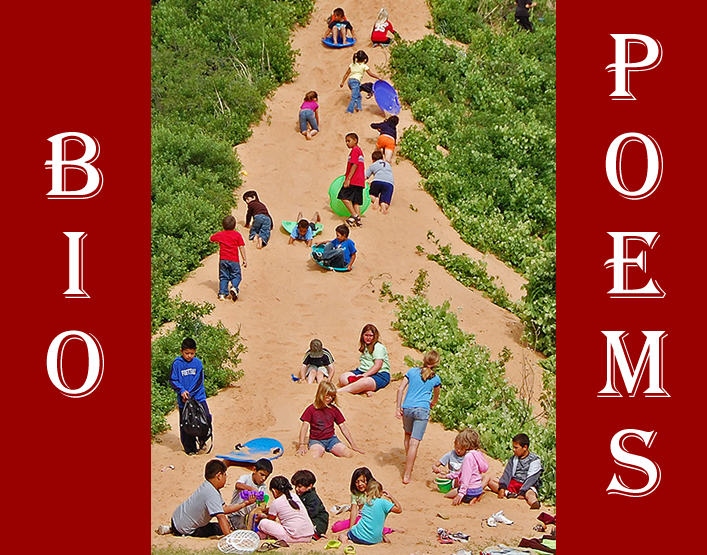
I call the assignment Bio Poem. It works well in almost all of my classes from Multicultural Issues to Special Methods of Instruction in Foreign Languages. The poem has 11 lines. Students begin and end the poem with their name. In between lines 1 and 11, students have specific text to create, and it's all about themselves.
Students in the methods class write one poem in the "target language," the one they will be teaching — usually Spanish, French, or German. They also write a translation in English. This year I have students who will teach English as a foreign or second language, so they were asked to compose a poem in English first and then translate it into their home language.
11 Lines, 2 Languages, 1 Identity
Here’s the format for the poem:
Line 1: First Name
Line 2: Four traits that describe your character
Line 3: Relative of _________ (brothers, sister, daughter, etc.)
Line 4: Lover of ________ (three people, things, or ideas)
Line 5: Who feels _______ (three emotions)
Line 6: Who needs _______ (three items)
Line 7: Who fears _______ (three items)
Line 8: Who gives _______ (three items)
Line 9: Who would like to see _______ (three items)
Line 10: Resident of ______
Line 11: Last name
Commonalities, Strategies, Adaptations, Objectives
In class, students read their poems in both languages. We discuss commonalties of content across poems, identify strategies for trying to comprehend a poem in a different language, speculate on how the assignment can be adapted for a number of language learning settings, and discuss the multiple objectives inherent in the task.
I invite you to enjoy the Bio Poem creations from my remarkable students and future teachers.
Reference:
Holmes, V.L., & Moulton, M.R. (2001). Writing simple poems: Pattern poetry for
language acquisition. Cambridge, UK: Cambridge University Press.
E D I T O R ' S N O T E :
Lines with many words in some of our Bio Poems break in two, making some of the creations more than the 11-line model. We follow the spirit of the law, not the letter of the law, here at the Multicultural Issues web. It's all good.


Extroverted, enthusiastic, curious and humorous
Mother of Sherry Rao
Lover of reading, fun and beauty
Who feels happy, hopeful and sometimes lonely
Who needs friendship, knowledge and perseverance
Who fears age, illness and love
Who gives insight, help and love
Who would like to see the prosperity of China,
wellbeing of people
and health of my families
Resident of Guangzhou, China

英
外向、热情、好奇和幽默
饶轩语的妈妈
喜欢阅读、找乐子和美
感到快乐、充满希望,偶尔也会孤单
渴望友谊、知识和坚强的毅力
害怕衰老、疾病和死亡
给予见解、帮助和爱
希望中国富强、人民幸福和家人健康
居住在中国广州
彭


Organized, motivated, friendly
Relative of one brother and one sister
Father of one little angel (Thekra)
Lover of reading, writing, and teaching
Who feels hope, love, and happiness
Who needs success, family, and friends
Who fears God, dark, and disrespect
Who gives support, protection, and love
Who would like to see the Holy Mosque in Makkah,
the Red Sea in Jeddah, and Niagara Falls
Resident of Fayetteville, Arkansas, USA
وهيب
منظم ومتحفز ودود
أخ لأخ واحد وأخت واحده
أب لملاك صغيـــــــرة
محب للقراءة والكتابة والتدريس
يشعر بالأمل والحب والسعادة
محتاج للنجاح والعائلة والأصدقاء
يخاف الاله والظلام وعدم الاحترام
يعطي الدعم والحماية والحب
يرغب برؤية المسجد الحرام بمكة والبحر الأحمر بجدة وشلالات نياجرا
يسكن في مدينة فيتفل بأمريكا
البلادي
Moratab, motahafez, and lateef
Qareeb le akh wahed and akht waheda
Abu le ebnah wahedah (Thkra)
Moheb le alqerah, alketabah, wa altadrees
Ashar be sadah, alhob, and alamal
Mohtaj leanjah, alaelah, and alashab
Akhafu min alrab, aldalam, and adm alehtram
Yogadem almosadah, alhemaiah, and alhob
Areed an ara ara almashed alharam
wa albahr alahmr and shlalat niagra
Askon fe medinat Fayetteville in Amrica


Ambitious, driven, intelligent, and fabulous
Son of Dorothy, brother to Z, Sam, and Joe
Lover of sustainability, travel, and literature
Who feels tired, stretched thin, and close to the finish line
Who needs friendship, food, and WiFi
Who fears failure, ignorance, and power outages
Who gives guidance, love, and empathy
Who would like to see his father one more time,
Japan for a little longer, and the rest of the world
Resident of Gillett, Arkansas
Ehrgeizig, engagiert, intelligent, und fabelhaft
Sohn von Dorothy, Bruder von Z, Sam, und Joe
Liebhaber der Nachhaltigkeit, Reisen, und Literatur
Der müde, gestreckt dünn, und in der Nähe der Ziellinie fühlt
Der Freundschaft, Essen, und WiFi braucht
Der Angst vor Scheitern, Unwissenheit, und Stromausfälle hat
Der Beratung, Liebe, und Mitgefühl gibt
Der seinen Vater noch einmal zu sehen möchtet,
Japan etwas länger zu besuchen möchtet,
und gerne den Rest der Welt zu sehen würde.
Einwohner von Gillett, Arkansas


Nice, friendly, talented, intelligent
Daughter to my mother and my father
Lover of good, knowledge, and light
Who feels joy, happiness, and passion to teach Spanish
Who needs friendship, good days, and the sun
Who fears loneliness, silence, and the dark
Who gives friendship, kindness,
and happiness to everyone
Who wants to see all of the Spanish-speaking countries,
world peace, and Heaven
Resident of Fayetteville, AR
Simpática, Amable, Talentosa, Inteligente
Consanguínea de mi madre y mi padre
Amante de lo bueno, el conocimiento y de la luz
Quien siente alegría, felicidad,
y pasión hacia la enseñanza del español
Quien necesita amistad, días buenos, y el sol
Quien le tiene miedo a la soledad,
el silencio, y la oscuridad
Quien da amistad, simpatía, y felicidad a todos
Quien quiere ver todos los países hispanohablantes,
la paz del mundo, y los cielos
Residente de Fayetteville, AR


Hardworking, caring, understanding and friendly
A daughter of great parents,
a sister of caring and educated siblings,
a wife of a handsome, hardworking, and lovely husband,
and a mother of three wonderful and smart children
Lover of God, family, and nature
Who feels hopeful, blessed, and passionate
Who needs a safe place to live,
continuous love of her family, and health
Who fears failure, injustice, and snakes
Who gives advice, support, and comfort
Who would like to see justice, peace, and success
Resident of Fayetteville, Arkansas
حوراء
مثابرة و معتنية و متفهمة و ودودة
أبنة لابوين عظيمين وأخت لأخوة وأخوات متعلمين وزوجة لزوج وسيم ومثابر وأم لأطفال
رائعين وأذكياء
محبة لله وللعائلة وللطبيعة
التي تشعر بالأمل والمباركة والعاطفة
التي تحتاج مكانا آمنا للعيش، والحب المستمر لعائلتها، والصحة
التي تخشى الفشل والظلم، والثعابين
التي تعطي النصائح والدعم والراحة
التي تحب أن ترى العدالة والسلام والنجاح
التي تقيم في فايتفيل، أركنساس
الزوين


Qian
Kind, honest, curious and responsible.
Daughter of a great father and a loving mother.
Sister of a patient brother.
Aunt of a precious niece.
Lover of food, nature and life.
Who feels happy, sad and blessed.
Who needs faith, patience and peace.
Who fears time, space and uncertainties.
Who gives love, comfort and help.
Who would like to see peace on earth,
love between people and return of Jesus Christ.
Resident of Xinyang, Henan, China.
Last name Zhang.
名倩
善良,诚实,好奇,富有责任心。
有一个伟大的父亲和一个慈爱的母亲。
有一个极具耐心的哥哥。
有一个被珍爱的侄女。
热爱美食、自然和生活。
有时高兴,有时难过,却拥有上帝的保守。
需要信仰、耐心和平和。
害怕时间、距离和不确定。
给予爱、安慰和帮助。
想要看到世界的和平,
人与人之间的爱以及基督耶稣的归来。
出生在中国河南省信阳市。
姓张


Hard-working, friendly, curious, and athletic
A relative of one brother, his mother, his father,
his grandparents, and his nephews
A lover of his wife, learning, and running
Who feels happiness, optimism, and energy
Who needs fresh air, friends, and music
Who fears death, others’ sadness, and octopi
Who gives others smiles, friendliness, and help
Who would like to see a world at peace,
his great-grandchildren,
and equal opportunities for all
A resident of Fayetteville, Arkansas
Trabajador, amable, curioso y atlético
Un pariente de un hermano, su madre,
su padre, sus abuelos y sus sobrinos
Un amante de su esposa, el aprendizaje y el correr
Quien siente la felicidad, el optimismo y mucha energía
Quien necesita el aire fresco, los amigos y la música
Quien tiene miedo a la muerte,
la tristeza de otras personas y a los pulpos
Quien les da a otras personas sonrisas,
la amabilidad y la ayuda
Quien le gustaría ver un mundo en paz,
sus bisnietos y las oportunidades iguales para todos
Un residente de Fayetteville, Arkansas


Happy, caring, friendly, inquiring
Friend of dozens of international students
Lover of summer rolls, pianos,
and scenic attractions
Who feels hope, cheerfulness, and being blessed
Who needs true friendship, adventures,
and English exposure
Who fears loneliness, evilness, and war
Who gives love, effort, and trust
Who would like to see the Taj Mahal in India,
flower fields in the Netherlands,
and salt flats in Bolivia
Resident of Fayetteville, Arkansas
Vui vẻ, quan tâm đến người khác,
thân thiện, ham học hỏi
Bạn của mấy chục sinh viên quốc tế
Yêu thích gỏi cuốn, đàn piano,
và cảnh đẹp thiên nhiên,
Cảm thấy vui tươi, hy vọng, và may mắn
Rất cần tình bạn chân thành,
những chuyến phiêu lưu,
và giao tiếp tiếng Anh với người bản xứ
Sợ sự cô đơn, độc ác và chiến tranh
Chia sẻ sự yêu thương, nỗ lực, và niềm tin
Ước ao được đến thăm đền Taj Mahal ở Ấn Độ,
những cánh đồng hoa ở Hà Lan,
và hồ muối ở Bolivia
Cư dân Fayetteville, Arkansas


Loving, Caring, Friendly, Dancer
Daughter of my mother Holly, my father Randy,
sister of Belle, Trina, Anna, Aunt of Gabby and Kylie.
Lover of football, books, and Netflix.
Who feels joy, love, and sorrow (sometimes).
Who needs sleep, to dance, and iced tea.
Who is fearful of the future,
her career, and finances.
One who gives her love, care,
and ear to all who need it.
One who would love to see Greece, Japan, and Finland.
Resident or Fayetteville, Arkansas, USA.
Amable, Cariñosa, Amigable, Bailarina
Hija de mi mamá Holly, mi papá Randy,
hermana de Belle, Trina,
y Anna, Tía de Gabby y Kylie.
Amante de fútbol americano, libros, y Netflix.
Quién siente alegría, amor, y amargura (a veces).
Quién necesita dormir, bailar, y té helado.
Quién teme del futuro, su carrera, y sus finanzas.
La que da su amor, cariño,
y oido a todos que lo necesiten.
Quién a que le gustaría ver Grecia, Japón, y Finlandia.
Residente de Fayetteville, Arkansas, los EEUU.


Curious, Funny, Talkative, and Intelligent
Relative of George, Susan, and Many Others
Lover of Books, Records, and Food
Who feels: Joy, Sadness, and Confusion
Who needs: Friends, Music, and Love
Who Fears: Poverty, Resentment, and Disconnections
Who gives: Time, Empathy, and Appreciation
Who would like to see:
Growth,
More Corners of the Globe,
and More Cooperation
Resident of Arkansas, the US, and the Earth
E D I T O R ' S N O T E :
Travis plans to teach English to speakers of other languages, so his poem is in English for future students of English -- no need for a second poem. Don't be fooled though. Travis also speaks Thai!